


It’s fair to say that pretty much everyone knows about The Hunger Games. Whether or not you’ve read the revolutionary series, you’ve probably heard about it through friends or seen clips from the movies on social media. The story starts when Katniss Everdeen volunteers to take her sister’s place in the annual Hunger Games — and it turns into a full-scale rebellion. Although it’s just a young adult book series, it managed to redefine the genre completely and leave the audience with many ideas and themes that we can apply to everyday life.

The Hunger Games was a huge success commercially, which drove many other authors to try and replicate it. Just think: how many dystopian/sci-fi novels have you read where the main character (usually a girl) has to fight against society due to some form of oppression. Of course, don’t forget the two seemingly opposite love interests she struggles to choose between! Divergent, Matched, and other books follow this formula to a T. But The Hunger Games is still leagues ahead of any of them. Why?
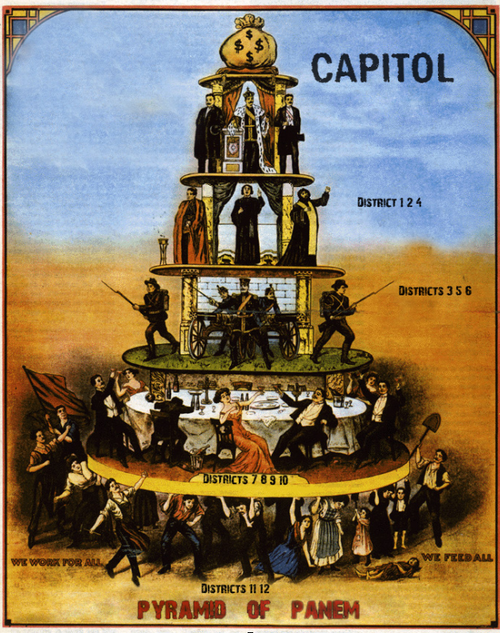
The Hunger Games was (and still is) so important because of its relevant critiques of society. While other novels focus on imaginary threats, many issues in The Hunger Games series are pertinent in our lives. Obviously, in most dystopian books, the government is the enemy, most likely because it is corrupt and/or has committed horrible atrocities. But The Hunger Games is the only book series that truly looks into the characteristics of such a society and how it came to be. Suzanne Collins even based it off of real life: in a video made for her publisher, she stated, “I was flipping though images on reality television where these young people were competing for a million dollars or whatever, then I was seeing footage from the Iraq war, and these two things began to fuse together in a very unsettling way, and that is the moment where I got the idea for Katniss’s story.” The most crucial element of The Hunger Games that sets it apart from other dystopian novels isn’t the storyline, or the characters: it’s how its issues are presented. When you read, it all seems absurdly cruel and horrific, before you realize that you have things in common with the villains as well as the heroes. When the Capitol citizens were gorging themselves at a feast while children starved in the districts, did that remind you of how you stuff yourself at a buffet without realizing how many people are starving right now? That realization is the first step towards consciously trying to be better.
So, how can you take inspiration from The Hunger Games and be a better person? Well, here are some ideas/lessons that I picked up from the series.
1. Don’t dehumanize other people.
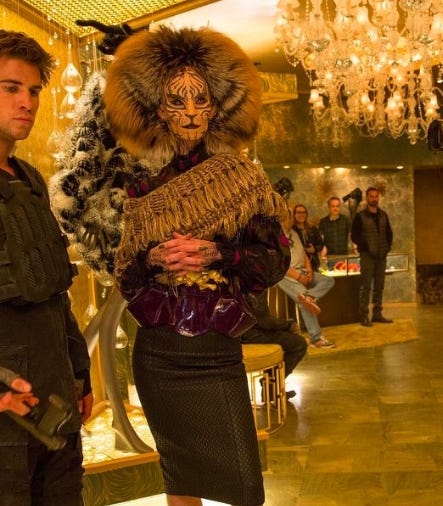
This one seems pretty obvious, right? Don’t treat other people as if they’re less than human — isn’t that just basic decency? But as the years pass by, more insensitive and widely inaccurate rhetoric is spreading: words that enforce harmful stereotypes and convince the public that entire groups of people are not worth their time, money, or attention. But here’s the thing: they are. Treating any group of people as less than human (less than your equals) results in apathy towards them. And apathy is a slippery slope. When you don’t care about a group of people, then atrocities could be committed, and you would either see it as a necessary action or be utterly indifferent. In The Hunger Games, the Capitol citizens view the children from the districts as bestial and savage instead of what they are: human, like them. This behavior has been reflected in countless instances throughout human history. For example, the Holocaust was brought on in part due to aggressive propaganda spreading a false perspective of specific demographics. Actions that divide people and create out-groups can quickly deteriorate into tragic situations.
2. Conditioning isn’t an excuse to treat other people badly.
Often in our lives, we encounter different types of people whom we’ve been told different things about, and we treat them better or worse than others. A lot of the time, this is an unconscious action, a reflex. But just because you’ve been taught something doesn’t mean you can’t overcome it, and it certainly isn’t a reason not to try. In The Ballad of Songbirds and Snakes, the prequel to The Hunger Games trilogy, Coriolanus Snow (the future dictator of Panem) and many of his classmates and acquaintances believe that the district kids are scum, and their actions show it. However, even then, there are still those who are different: Tigris and Lysistrata (Jessup’s mentor) are examples of this. This is also evident in Sunrise on the Reaping (the prequel detailing Haymitch, Katniss, and Peeta’s mentor, and his Games). Effie Trinket is every bit the spoiled Capitol citizen. However, when she is styling the tributes, she makes sure to treat them with kindness. This is another example of her still showing kindness and decency to the people whom she’s been raised to think she’s better than in every possible way. So, always remember that you, and you alone, are responsible for how you treat other people.


3. Empathy makes people human– don’t lose yours!
In a dystopian world where children are sent to fight to the death annually, it seems like a wonder that empathy could even exist. After all, in a place so barbaric, how could the goodness in people persist? But empathy shows itself everywhere, even in places it doesn’t seem like it would. Cinna, who was born and raised in the Capitol, helps with the rebellion of the districts. However, Katniss also shows deep empathy, which, in my opinion, is what makes her such an admirable character. In the middle of an arena where people are fighting each other to death, she stops and covers Rue’s dead body with flowers and sings to her as she dies. Even in these kinds of circumstances, Katniss showed empathy and displayed her humanity. This same empathy — this same love for fellow human beings — is what made her volunteer for her sister Prim and is also the reason why she became the face of the rebellion. So, you should also have empathy for others! We don’t live in an arena where we are fighting to the death. In our lives, most people’s battles are smaller and less noticeable. Simply acknowledging this and trying to understand other people’s situations is something we should do. It makes everyone at least attempt to be in each other’s position, and it helps us connect.
So, what can we learn from the most popular dystopian novel in recent history? Well, a multitude of ideas, but most importantly, the idea that caring about other people is deeply human. Treating other people as our equals is something that we owe to one another as human beings. If we show empathy for their situations and support them, we can form meaningful connections that support everyone. And if we make conscious efforts to break harmful conditioning and judge simply based on the people themselves, we can prevent harmful prejudices from surfacing and promote a more inclusive society. All of these help us become closer to other people — and become better people. Even though we are not fighting to the death, I believe — and I hope you do as well — that fighting to become more accepting and caring towards our fellow human beings is also something to fight for, with just as much passion.




 Eagle's Eye Newspaper